How to stop scrolling while eating without making meals harder
Make room for meals without an endless feed: practical options for eating alone, short work breaks, family tables and times when a screen helps you eat.
Keep the meal and change the screen habit around it. Prepare what you need before sitting down, put the feed out of reach and begin with a manageable part of one meal. If a screen currently helps you eat enough, preserve that support while changing things gradually.
In this guide
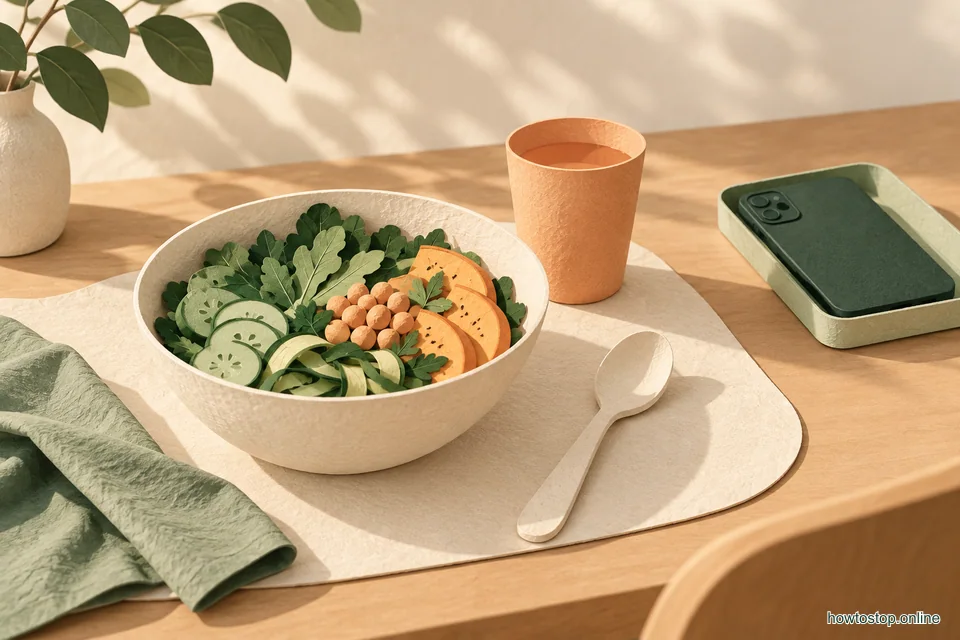
To stop scrolling while eating, keep the meal in place and make the feed less easy to reach. Have your food, drink and anything you need ready before you sit down. Put the phone somewhere other than beside your plate, then try eating a manageable part of the meal without opening the feed.
The goal is to have more choice about your attention. It is not to eat less, earn food, count bites or turn every meal into a concentration test. If you notice halfway through lunch that you have been scrolling, set the phone down and keep eating. Lunch still counts.
There are good reasons this habit can be difficult to change. A phone may be your company, your break from work, a way to make an uncomfortable room easier or the thing that helps you start eating. A useful plan has to account for what the screen is doing for you.
Find out what the feed is adding to the meal
Think about the last meal when your phone stayed in your hand. What was happening before the first scroll?
Perhaps you were waiting for food to heat, so you opened an app and carried it to the table. Perhaps sitting alone felt lonely. Perhaps work had taken all your attention and lunch was the first chance to catch up with friends or news.
You do not need to write a full diary. Pick the closest explanation:
| What the screen gives you | A change worth trying |
|---|---|
| Company while eating alone | A planned audio programme, a shared meal or a call that does not require browsing |
| A break from work | An actual pause away from the work screen, with something pleasant afterward |
| Something to do while food heats | A different waiting activity and a phone parking place before you sit down |
| Relief from food-related distress | Keep needed support and make changes with your care team if you have one |
| A way to avoid tense conversation | Address the setting or conversation; removing the phone alone may not help |
| Automatic entertainment | Choose in advance whether this meal includes media and where it ends |
These are options to test, not rules about the right way to eat. The best replacement is one that meets the real need without sending you into an endless feed.
Start with the meal that is easiest to change
Do not begin with the hardest dinner of the week if breakfast offers a calmer place to practise. Choose a meal where you have enough time, available food and some control over the setting.
You could put the phone away for the first part of breakfast. You could have lunch with a colleague once. You could eat your afternoon snack while looking out of the window, then check messages afterward.
Avoid delaying food while you arrange a perfect setting. If your lunch break is short, eat. If the only available seat is at your desk, use it. A change in attention should make nourishment easier to fit into your life, not add another barrier before you can begin.
Start with one clear change you can remember. “The phone goes in the bag when I bring my plate” is easier to carry out than a long list of rules about posture, chewing, silence and screen time.
Move the phone before you sit down
Once the meal and feed are already running together, stopping takes an extra decision. Make the decision earlier, when you are setting things up.
Choose an ordinary place for the phone: a shelf, a bag, a charging spot or a tray across the room. It should be safe and accessible if needed. You do not need to lock it away or buy a special box.
Putting it face down beside your fork may be enough for some people. If you keep turning it over, move it farther away. The point is to change the easy movement your hand already knows.
If you need your phone for a call, medication reminder, accessibility tool or other support, preserve that function. You could leave the needed app open, use a stand or keep sound on for a particular contact while putting the feed away. A useful device does not have to disappear for the meal to feel different.
For more ways to interrupt automatic app opening, see how to stop checking your phone.
Let the meal be ordinary
You do not have to turn lunch into a special exercise. You can notice whether the food is warm, whether you want a drink or whether the chair is comfortable. You can think about your afternoon. You can have a conversation.
Health Canada’s food guidance recommends making time for meals and reducing electronic distractions. That can be useful here without turning attention into a measure of virtue or a weight-control project.
Avoid rules such as counting every chew, allowing only a fixed number of bites or requiring yourself to prove hunger before eating. Those create a different problem. The purpose of putting the feed down is to make room for the experience of eating, including enjoying it and having enough.
If your thoughts wander, you have not failed. Attention naturally moves. Bring it back when you notice, in the same ordinary way you would return to a conversation after missing a sentence.
If you feel bored after a few mouthfuls
Boredom can feel surprisingly loud when a meal used to include a fast-moving feed. You may reach for the phone before deciding to do so.
Try a small pause in which you keep eating and leave the phone where it is. Look around the room, listen to the sounds nearby or notice the next mouthful. You do not have to enjoy every quiet moment before it is worth continuing.
Then ask whether you need a different setting. A view, a seat away from your workstation or company might make a bigger difference than trying harder at the same desk.
You can also choose a middle step. One selected audio programme may be easier to leave alone than a stream of clips. A single planned programme is not the same as repeatedly searching for something better. If it provides useful company, you can decide to keep it.
Watch whether the replacement actually fits. If you spend the whole meal choosing music, the selection process has taken the feed’s place. Set it up before sitting down, or choose a simpler option next time.
When you eat alone
A silent meal can feel lonely, especially if most of your day is already spent alone. The answer does not have to be a stricter phone ban.
You might arrange an occasional lunch call, share a meal with a neighbour or eat in a place with people around. You could put on familiar audio that gives company without needing your hands. You might also decide that some meals include a programme and others do not.
The useful question is: “Did I choose this company, or did I lose the whole break searching?”
If you want to contact a friend, send a message before the meal rather than spending lunch waiting inside the conversation. Eat while the reply is pending. You can read it afterward unless there is a real reason to respond sooner.
There is no need to make every meal social. Having a few workable choices can remove the feeling that your only options are endless scrolling or uncomfortable silence.
Protect a short work lunch
If work keeps reaching into lunch, your feed may be the only visible sign that you have stopped working. Removing it while leaving the job open can make the break feel even less yours.
Close or minimize the work you can pause. Move the plate away from paperwork if possible. Decide what happens after eating: perhaps a short walk, a conversation or a few minutes of chosen entertainment. The break should contain something you want, not just a different kind of self-control.
Where you are expected to remain available, make the distinction practical. Keep the channel needed for urgent contact and leave unrelated apps closed. If someone interrupts, deal with what truly needs attention, then return to your food.
Do not skip lunch because you could not create an uninterrupted break. A difficult working setup needs changes to workload or expectations; it does not make you less entitled to eat.
Agree on a shared table without policing it
If you live with other adults, talk about the change before the meal. “I miss talking over dinner. Would you like to try leaving our feeds aside tonight?” is clearer than silently placing a phone basket on the table and judging who uses it.
Keep necessary uses available. Someone may need a medical device connection, help reading, communication support or contact about a care responsibility. Ask rather than assuming every screen use means disinterest.
Offer a shared action, not surveillance. You can put your own phone away and invite conversation without checking another person’s screen. If they decline, decide what you want to do with your attention anyway.
If dinner conversations are tense, make the request smaller: a calm topic, fewer questions or a meal in a different place. A phone may be hiding a problem at the table. Moving the device will not automatically make the table feel safe or welcoming.
If screens currently help you eat
Some people use a familiar programme or audio to manage distress around eating, sensory discomfort or a difficult day. Removing that support suddenly may make getting through a meal harder.
Keep regular meals and snacks as the priority. If you have a treatment plan, follow it and discuss changes with the people supporting your care. NHS guidance for binge eating treatment includes regular eating and advises against dieting during treatment. A screen habit should not become a reason to restrict food or compensate later.
You might begin by changing the content rather than taking it away: familiar audio instead of a feed that brings upsetting body or diet messages. You might leave the screen present but stop searching during the meal. Or you may decide this is not the right time to change this support.
These are practical adjustments, not a treatment plan. If a new rule leads you to postpone meals, eat less or feel more distressed, drop that rule and return to the support that helps you eat.
How to stop emotional eating discusses food and feelings without treating comfort as something you must earn or remove.
When a quick check takes over
You may need to check a genuine message during a meal. Deal with that specific task, then close the app. Try to avoid letting a useful action become an open invitation to browse.
For example: read the delivery message, send the requested answer and put the phone back. You do not need to check the news because the phone is already unlocked.
If you do start scrolling, notice where you are in the meal and continue from there. There is no need to start eating again, delay the next meal or promise a stricter rule tomorrow. Return the phone to its place and finish in whatever way is comfortable.
If the same interruption happens repeatedly, change the setup. Perhaps the phone needs to be farther away, the necessary alert needs a clearer sound or the meal needs a different kind of company. Treat the difficulty as information about the plan.
Keep what makes meals easier
After trying a change, look for useful effects: you remember taking a break, you enjoyed a conversation, you finished eating without chasing clips or you felt less pulled back to work. You do not need a perfect screen-free record.
Keep media where it serves a purpose and reduce the browsing that takes over. The same approach can help with other constant background content; see how to stop watching TV in the background.
At your next meal, make one small choice before sitting down. Put the feed away, keep the support you need and let yourself eat. The meal does not have to be impressive to deserve your time.
Sources and references
- Health Canada: Take time to eat. Public food guidance on making time for meals, enjoyment and electronic distractions. This guide does not use screen reduction as a weight-loss or restriction strategy.
- NHS: Treatment for binge eating disorder. Clinical context for regular eating and avoiding dieting during treatment; this does not mean that scrolling at meals is an eating disorder.
A useful next step, thoughtfully explained.
The HowToStop Multidisciplinary Team brings together practical guidance on habits, wellbeing and everyday change.
Our editorial approach